Sostenibilidad
Construyendo hoy un futuro sostenible
La sostenibilidad es esencial. Mediante el suministro de infraestructuras de comunicaciones resistentes, creemos que podemos influir de forma positiva en las comunidades y hacer avanzar a la sociedad.

Scope 3
Emissions pilot, to understand emissions produced by Boldyn's UK business supply chain

29%
Female workforce, exceeding the 2024 target of 28%
Forward
78%
Engagement index exceeding the global external benchmark of 72% and the Telecom Industry benchmark of 74%
Innovación

Futuro
2314
Health, safety and environment-related inspections undertaken in 2024

Sustainability Report 2025
Transformando la conectividad para un futuro sostenible
In our latest report, we identified key areas where we can make a lasting impact and set ambitious targets to guide us. Find out how we will deliver advanced and sustainable connectivity responsibly.

Comunidades conectadas. Construidas de manera más inteligente.
En 2021 nos adherimos al Pacto Mundial de las Naciones Unidas (ONU), la mayor iniciativa mundial de sostenibilidad corporativa, cuyo objetivo es impulsar un movimiento mundial de empresas sostenibles. Nuestro objetivo es claro. Pretendemos adoptar medidas responsables contra el cambio climático, reducir las desigualdades, operar de forma ética y seguir innovando y proporcionando infraestructuras de comunicaciones para mantener conectadas a las comunidades.
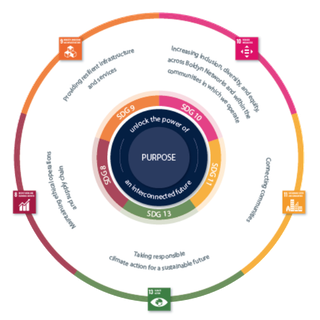
Our sustainability vision
Our sustainability vision reflects our purpose of unlocking the power of an interconnected future. We are committed to increasing equity, diversity and inclusion. We continuously consider, manage and improve our impact on society and the planet. And we prioritise responsibly delivering advanced communications networks. To all. For more equitable and sustainable communities.

Neutral host networks: A solution to greener deployments
We commissioned ABI Research to conduct an independent research comparing traditional standalone 5G networks with neutral host 5G networks. Results show that the latter can help reduce overall deployment costs and energy consumption by up to 47% and 38%, respectively.