CTO Andy Conway on why it’s time to rethink mission‑critical comms and what’s holding you back
Andrew Conway, CTO Europe
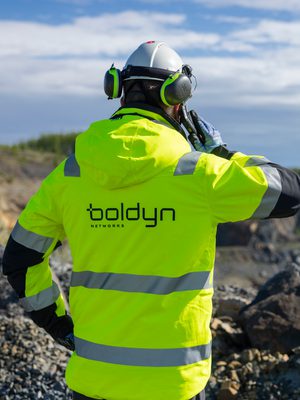
Communication is one of the most basic human needs, yet it remains one of the most undervalued strategic assets in modern industry. We rarely think about communication at all - until the moment it breaks down, and suddenly nothing else can move forward. When you’re running a port, an airport, a hospital, a mine, or a sprawling logistics operation, the moment communication fails, everything else follows. Too many organisations are still relying on outdated beliefs about how voice and video should function. Those assumptions are quietly eroding safety, efficiency, and competitiveness every single day. It’s time to challenge them.
Myth 1: Legacy systems are “still good enough”
One myth I always hear is that legacy systems are “still good enough.” If that were true, enterprises wouldn’t be struggling with patchy building coverage, blind spots underground, or hardware that can’t keep pace with digital workflows. TETRA, DECT and analogue PMR had their era, but they simply weren’t built for real‑time data exchange, high‑quality video, or the connected-worker environments emerging today. Private 5G networks, on the other hand, bring reliable, secure, site‑wide voice, video, and data; something legacy technologies cannot deliver, while letting staff rely on seamlessly connected smartphones instead of juggling two or three separate devices.
Myth 2: Video “adds complexity”
Another stubborn belief is that video “adds complexity.” In reality, video has become one of the most powerful tools in operational environments. It gives field engineers instant access to remote expert support. It enables real‑time remote diagnostics in dangerous spaces. It transforms the speed and accuracy of emergency response. And the numbers prove it: 90% of enterprises improved worker collaboration by more than 10% through connected-worker and analytics tools1, 70% boosted response times in emergencies by providing real-time location data and communication, and 65% saw safety improvements above 10%2, all through solutions that make video part of the workflow rather than a bolted-on afterthought. Video isn’t about complexity. It’s operational clarity.
Myth 3: Switching to a new system means organisational chaos
Then there’s the fear that switching to a new system means organisational chaos. Let’s be clear: modernisation does not require ripping out legacy systems overnight. With technologies like Radio‑over‑IP bridges, organisations can bring smartphones and advanced features online gradually while keeping TETRA or DECT running as long as needed. This phased approach avoids disruption, manages cost exposure, and ensures teams maintain full operational capability throughout the transition. It’s exactly how transformation should work. Deliberate, controlled, and aligned to business pace.
Myth 4: Private networks are expensive
Cost is another myth we often have to address. Private networks are seen as expensive - until you compare them to the true cost of downtime, siloed systems, unplanned outages, and inefficient workflows. Enterprises adopting private networks are already reporting 78% achieving more than 10% cost reductions through automation, IoT, robotics, and condition monitoring1. By integrating robotic and drone‑based inspection, organisations can achieve major cost reductions, decrease downtime, and significantly elevate the overall quality and reliability of their operations. Predictive maintenance alone can cut costs by up to 30% and reduce breakdowns by 75%3, massively improving uptime. Logistics firms are seeing 25% better continuity for AGVs and AMRs, and manufacturers are recovering 20% faster after network-related incidents4. Private networks aren’t a cost centre. They’re an efficiency engine.
Myth 5: Security “comes baked in”
And finally, the assumption that security “comes baked in” is dangerously outdated. For industries where safety and data sovereignty matter, this isn’t a luxury. It’s a requirement. In today’s world, where the boundary between IT and OT is dissolving, security is only as strong as the network architecture beneath it. Private networks create a fully closed ecosystem where voice, video, and data stay on‑site - never touching the public internet. 5G itself inherently provides advanced authentication and encryption, keeping the data safe. This reduces exposure, supports strict regulatory compliance, and gives enterprises full control over access, routing, and monitoring.
Private 5G enabled critical communications in practice
So, what does seamless mission‑critical communication actually look like in practice? According to the latest GlobalData and Nokia research, enterprises embracing connected-worker solutions and private wireless are seeing dramatic gains: 90% are now connecting previously unreachable assets, from industrial IoT to digital twins, resulting in performance improvements exceeding 10%. 78% are cutting emissions through automation, sensors and condition monitoring. 78% are lowering operational costs, and 73% are accelerating productivity through integrated video, analytics and worker safety technologies. These aren’t marginal gains - they’re competitive differentiators.
Add to that the broader industry evidence - smart Personal Protective Equipment (PPE) reducing incident response times by up to 50%5, private networks driving 30% fewer unplanned outages 4, and dedicated connectivity enabling safer, more resilient operations - and the conclusion becomes obvious: modern mission‑critical communication isn’t just about talking. It’s about transforming how organisations work, react, and stay ahead.
Communication is no longer a utility. It’s a strategic advantage. The organisations that understand this - and modernise accordingly - are the ones who will lead in safety, efficiency, and operational excellence. Those who cling to outdated assumptions will increasingly find themselves limited by them.
The future of mission‑critical communication is already here. The only question is who’s ready to embrace it.

Move beyond outdated systems
Download the guide
Sources:
- GlobalData Private Wireless Survey 2024
- Nokia: The impact of the connected worker on safety, collaboration and productivity in mining 2025
- McKinsey, Aberdeen Group: The future of maintenance for distributed fixed assets 2020
- IoT Business News
- oteplace.com: Smart PPE. How Connected Safety Gear is Reducing Workplace Injuries & Boosting Productivity