The future of connectivity at heavy-duty ports
By Brendan O'Reilly, Chief Executive Officer, UK&I
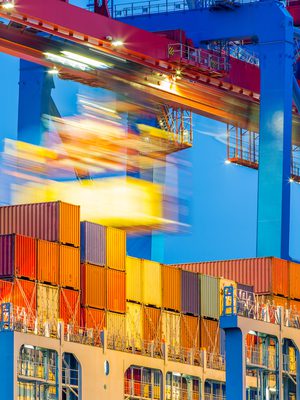
This article was originally published by Forbes.com on 23 January 2026. See the original article here.
Ports have always been at the heart of global trade. But today, they’re also becoming testbeds for some of the most advanced connectivity innovations in the world. As cargo volumes surge and supply chains grow more complex, the need for intelligent, resilient connectivity at heavy-duty ports has never been greater.
These expanding industrial sites - filled with towering cranes, fleets of vehicles and thousands of containers - are now being reimagined through the lens of digital transformation. Today’s smart ports are using connectivity not only for faster communication, but to enable smarter, safer and more sustainable operations.
A New Era Of Port Operations
Unlike other industrial hubs, ports operate in high-stakes environments where every second counts. The scale and complexity of these sites demand connectivity solutions that are robust, secure and tailored to mission-critical tasks.
Recent deployments at major container terminals have demonstrated how advanced wireless networks can unlock new capabilities. Cranes, for example, are becoming intelligent assets. With onboard sensors and edge computing, operators can monitor performance in real time, predict maintenance needs and reduce downtime.
Similarly, connected workers equipped with rugged devices can access live data, coordinate across teams and respond to issues faster. Autonomous vehicles and drones are beginning to navigate port environments by relying on ultra-low latency connections to operate safely and efficiently. Even energy management is getting smarter, with real-time monitoring helping ports reduce emissions and optimise consumption.
Why Connectivity Matters More Than Ever
Ports are facing mounting pressure to modernise for safety, sustainability and global integration. Here’s why connectivity is no longer optional:
- Scale And Complexity: Ports are vast ecosystems with diverse assets - cranes, trucks, sensors, and workers - all needing seamless communication
- Environmental Pressures: Smart connectivity enables better monitoring and greener operations, helping ports meet regulatory and sustainability goals
- Global Logistics Demands: Real-time data exchange is essential for syncing with international shipping routes and minimising delays
Building The Blueprint For Smart Ports
Despite the promise, deploying advanced technology in ports can be incredibly challenging. Salt air, heavy machinery and constant movement can degrade equipment and interfere with signals. Metal containers and cranes create reflections and dead zones, while legacy systems often resist integration with modern networks.
Security is another critical concern. Ports are vital infrastructure, and any digital upgrade must be accompanied by rigorous cybersecurity protocols to protect sensitive data and ensure operational integrity.
To meet these challenges, ports are adopting a layered approach to connectivity. The most forward-thinking strategies include:
- Private Wireless Networks: Offering the reliability and control needed for industrial-grade performance.
- Edge Computing: Bringing processing power closer to the action for real-time analytics and decision-making.
- Modular Infrastructure: Allowing ports to scale as operations evolve and adapt to changing demands.
- Open Standards: Ensuring interoperability across systems and vendors for seamless integration.
Successful port transformation requires collaboration across stakeholders, from logistics teams to IT departments, and a clear vision for how digital tools can enhance every aspect of operations.
Ports As Innovation Platforms
Looking ahead, ports have the potential to become innovation platforms for the entire supply chain. With intelligent connectivity, they can serve as data-rich ecosystems where logistics, customs and environmental systems converge.
Imagine a port where berth scheduling is optimised through predictive analytics, container movements are tracked in real time, and emissions are monitored continuously to meet sustainability goals. These are all emerging realities.
As heavy-duty ports embrace digital transformation, their future lies in their ability to connect machines to systems, workers to data, and local operations to global networks. Smart ports will evolve from industrial gateways to smart, sustainable engines of commerce.
And while the cranes may still tower and the containers still stack, the real transformation will happen in the invisible threads of data and communication that bind it all together.